
Picture this scenario. It's nearly 11 PM on a Tuesday. A tired parent finally sits down after wrestling kids through homework, dinner, and the endless bedtime negotiations. They remember that dental checkup they've been putting off. They grab their phone, Google "dentist near me," and land on your beautifully designed website.
Your reviews look great. Your team photos are warm and welcoming. Everything feels right. Then they spot it: "Call us to schedule."
Reality check: they're not calling anyone at 10:45 PM. And by tomorrow morning? Life will have already gotten in the way. That patient is gone, likely booking with the practice down the street that offers online scheduling for dentists.
This scenario plays out countless times every single day. And here's what makes it even more frustrating: you're losing these patients not because of your clinical skills, your team, or your facility. You're losing them to something much simpler.
Friction.
In dental marketing terms, friction is any obstacle, delay, or outdated step that makes scheduling harder than it needs to be. It shows up in sneaky ways you might not even notice: the "call during office hours" message, long intake forms just to request an appointment, the dreaded "we'll call you back to confirm," or worse, getting put on hold while smooth jazz plays endlessly.
Every single one of these moments creates what marketers call a drop-off point, a spot where potential patients simply bail and move on. According to research, nearly 1 in 5 people abandon the booking process if it feels too complicated or takes too long. Most of those people never circle back.
Now consider this: your patients order dinner from their phones in under two minutes. They book haircuts, rideshares, and hotel rooms without ever speaking to a human. When scheduling a teeth cleaning feels more complicated than ordering takeout, your practice starts looking outdated before anyone even walks through your doors.
The solution isn't complicated. It's eliminating barriers with online scheduling that lets patients see real-time availability and book instantly, whether it's 3 PM or 10:45 PM.
Let's talk about who's actually making dental appointments these days. Millennial parents now represent the largest demographic of parents with young children, and their expectations around convenience are vastly different from previous generations.
These aren't lazy patients. They're juggling work deadlines, school pickups, meal planning, and approximately seventeen other things simultaneously. When they find a five-minute window to think about dental care, they want to book right now, not play phone tag with your front desk tomorrow.
Here's the reality that changes everything: at least 43% of patients search for dentists after hours. That means nearly half your potential new patients are ready to take action when your office is closed, lights off, team at home.
Without online scheduling, every single one of those after-hours searches is a missed opportunity. With it? Your practice is essentially working 24/7, capturing patients while you sleep.
The practice that makes booking easy wins. Every time.
When was the last time you got genuinely excited about filling out a contact form and waiting for someone to call you back?
If you're like most people, the answer is never.
Contact forms create hidden friction that feels modern but actually kills conversions. Here's what typically happens: A patient fills out the form during their lunch break, submits it, and then waits. Maybe your team calls back the next day. Maybe the patient misses that call because they're in a meeting. Now you're playing phone tag for two days before finally connecting.
Compare that to dental practices using real-time online booking. Patients browse available times, pick a slot that works, get instant confirmation, and they're done in under three minutes. No waiting. No uncertainty. No disappearing patients.
One Oklahoma City practice made the switch from contact forms to online scheduling and booked more appointments in a single month than they had in the previous six months combined. That's not a typo. The difference really is that dramatic.
Your front desk team members are heroes. They're juggling check-ins, managing last-minute cancellations, answering insurance questions, handling walk-ins, and somehow still managing to greet everyone with a smile. They are genuinely the heartbeat of your practice.
But here's what they might not be telling you: they're drowning.
Consider this statistic: dental practices miss 28-32% of incoming calls, usually during the busiest hours. That's roughly one-third of potential patients who never got through to book. And every phone call for a routine cleaning or checkup is time your team isn't spending on patients who actually need face-to-face attention.
An online scheduler doesn't replace your front desk team. It rescues them from administrative overload. When routine bookings happen automatically, your staff can focus on what they do best: building relationships, explaining treatment options, and making patients feel genuinely cared for.
The result is a less frazzled team, smoother days, and patients who feel the difference the moment they walk in.
Convenience sounds nice, but let's talk about what actually matters to your practice: revenue.
Every time someone lands on your website ready to book but bounces because they have to call, that's money walking out your door. Now imagine capturing even 10% more of those high-intent visitors, the ones scrolling at 11 PM with their dental benefits about to expire.
Here's a snapshot from a Missouri family practice that made the switch:
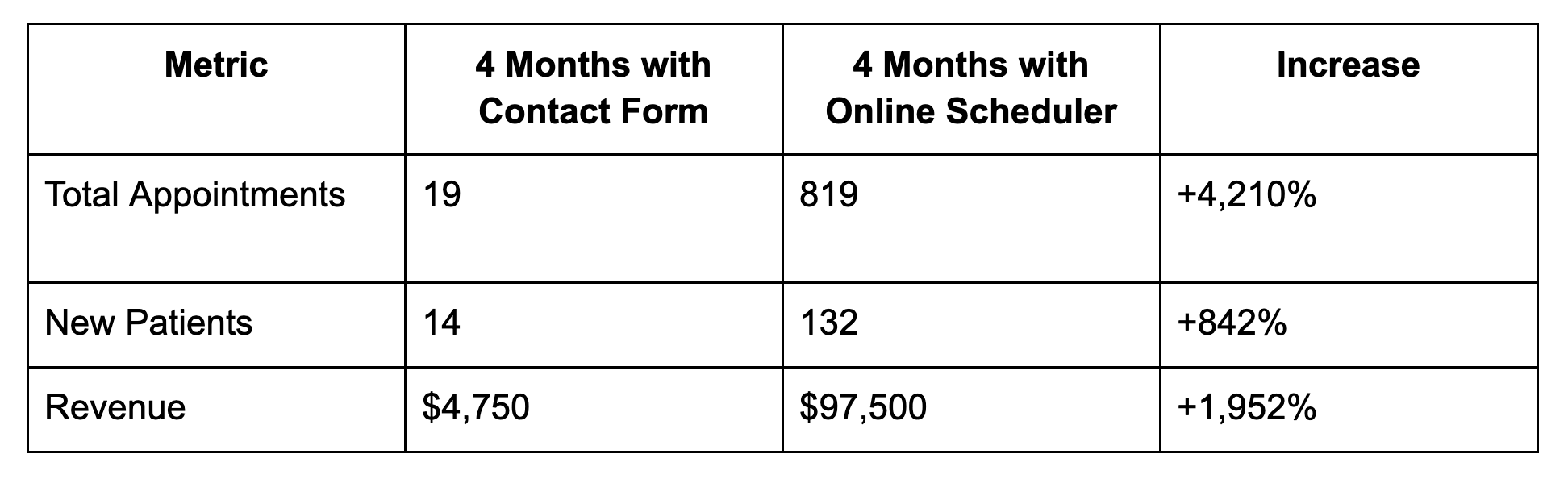
These numbers tell a clear story. When you remove barriers and make booking effortless, more patients follow through. The cost of implementing online scheduling typically pays for itself within weeks through captured appointments that would otherwise have disappeared.
Plus, automated reminders and confirmations that come with most scheduling systems significantly reduce no-shows and last-minute cancellations, further protecting your schedule and revenue.
Here's something worth sitting with: today's patients judge your practice long before they ever meet you in person. If your website still relies exclusively on phone calls or clunky forms, it sends a message, even if your clinical care is exceptional.
To digital-first patients, outdated scheduling signals outdated everything.
Consider that 70% of millennials prefer scheduling online instead of making phone calls. When booking feels slow or inconvenient, patients assume their overall experience might feel the same way. They choose a practice that feels more modern and accessible.
Online scheduling is one of the fastest ways to update your digital presence and signal that your practice is current, organized, and patient-focused. It's a small change that makes a significant impression.
Adding online scheduling might sound like a big technology project, but most practices go live within a week or two. Here's the typical process:
There's no major disruption to your current operations. Your phone lines stay open for patients who prefer calling, while everyone else gets the convenience they're looking for.
You didn't invest years in dental education to lose patients over booking logistics. But that's exactly what happens when friction stands between someone ready to schedule and an open slot on your calendar.
Online scheduling removes that friction completely. It captures patients at the moment they're ready to commit, frees your team to focus on meaningful patient interactions, and positions your practice as the modern, convenient choice in your market.
The practices that make booking easy are winning new patients right now, including the ones your website visitors are choosing instead. The only question is whether you'll implement online scheduling before or after you've lost your next dozen potential patients to convenience.
Q: How much does online scheduling typically cost for a dental practice?
A: Most dental scheduling platforms cost between $100-500 per month depending on features and practice size. However, the ROI typically becomes positive within weeks. If online scheduling captures even 2-3 additional patients monthly, it pays for itself many times over when you factor in lifetime patient value and referrals.
Q: Will online scheduling create double-bookings or scheduling mistakes?
A: Not if you choose a system that syncs in real-time with your practice management software. Proper integration means patients only see accurate availability, appointment types match your practice rules, and your schedule updates automatically without manual data entry.
Q: What happens if a patient books the wrong type of appointment online?
A: Quality scheduling systems let you customize appointment types with clear descriptions and qualifying questions. You define exactly what's available for online booking versus what requires a phone consultation. Automated confirmation calls can also catch any issues before the patient arrives.
Q: Can older patients figure out online scheduling?
A: Most can and will. People of all ages now book flights, hotels, and restaurant reservations online regularly. The key is that online scheduling adds an option without removing phone booking. Patients who prefer calling can still call, while everyone else gets the convenience they want.
Q: How long does it take to implement online scheduling?
A: Most dental practices go live within one to two weeks. The actual setup often takes just a few days, with additional time for staff training and testing before promoting it to patients. It's significantly faster than most practice changes.